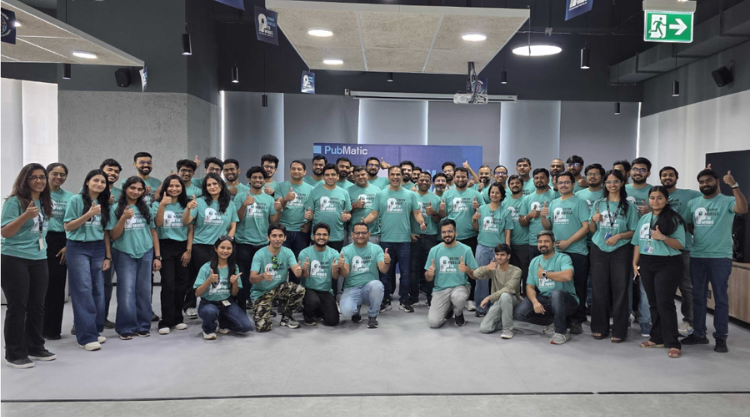
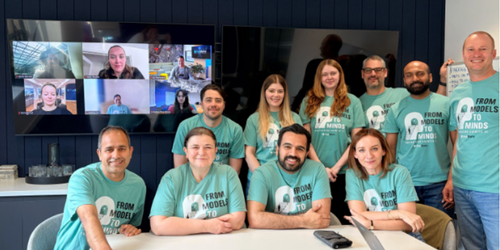
At PubMatic, innovation is more than a buzzword. It is a deeply held work ethic. Our internal hackathon is one of the most honest expressions of that, and on April 21 and 22, 2026, we ran the 12th edition. The tagline this year captured exactly where our Engineering culture has arrived: “Models to Minds: Engineering Agentic AI.”
This year’s theme reflected a shift already underway across the industry: from AI that responds to AI that acts. The goal wasn’t to build smarter chatbots — it was to engineer systems that can plan, execute, and adapt on their own.
Our Most Ambitious and Cross-Functional Hackathon Yet
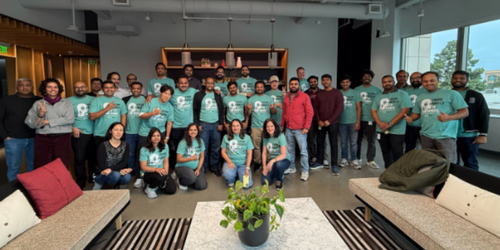
This was the largest Hackathon ever; we had 111 teams who successfully built, demoed, and presented. 416 innovators across 5+ countries came together over 48 hours, and the energy was unmistakable from hour one.
What stood out was the shape of the collaboration. Sixty-one teams (54%) were
Agentic AI: From Trend to Operating Model
Out of 111 projects, 47 (42%) were explicitly agentic. These were systems using LLM reasoning, MCP workflows, and tool orchestration to break down goals, execute tasks, and adapt as conditions changed.
What stood out was the convergence of ideas, execution, and business outcomes. Teams kept arriving at the same patterns: multi-agent collaboration, open interfaces, and systems that continuously learn from live signals.
The bigger shift is that AI is moving past assistive features into active execution. It’s evolving from passive tools into systems that can reason, coordinate, and optimize in real time, alongside the engineers building them.
At this point, agentic AI doesn’t feel like a trend. It feels like the way we build now.
Three Shifts That Stood Out:
- Continuous optimization over periodic tuning: Teams are replacing “deploy and revisit later” cycles with systems that continuously react to live signals, optimizing pricing, pacing, yield, and targeting in real time.
- Operational AI becoming productized: Capabilities once limited to internal engineering workflows (diagnostics, observability, intelligent alerting) are increasingly becoming customer-facing product experiences.
- Open systems winning by default: Many agentic prototypes adopted open communication patterns and emerging standards like MCP, reinforcing a broader industry movement toward interoperability instead of closed ecosystems.
160+ Hours of Deep Evaluation
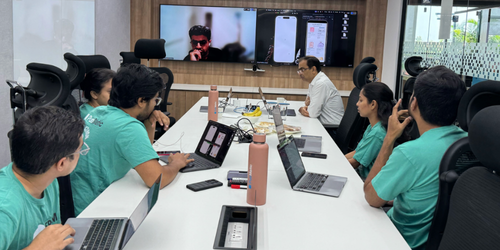
Narrowing 111 demos down to a Top 11 wasn’t quick. Our judges put in over 160 cumulative hours across four days, on top of their regular workloads, evaluating every project for originality, real-world impact, technical depth, and business relevance.
Looking Ahead
“Models to Minds” was the right tagline at the right moment. Our engineers aren’t learning agentic AI anymore. They’re using it, composing it, arguing about how to ship it responsibly at scale. That’s a meaningful shift, and it’s the kind of shift that quietly compounds.
A heartfelt thank you to all 416 participants, the mentors, organizers, and judges who made it happen. The ideas that came out of these 48 hours will shape conversations across our platform for months to come.